
Testosterone Coffee vs Testosterone Pills: Which One Is Actually Worth It?
Testosterone Coffee vs Testosterone Pills: Which One Is Actually Worth It?
TL;DR: This isn't really a debate about which has better ingredients - both formats can carry effective doses. It's a debate about compliance. Natural testosterone-support ingredients work cumulatively over months. The format you actually take every day beats the one you take 70% of the time. For most men, that's coffee.
Two formats. Same category. Very different daily experience.
On one side: capsule-based testosterone boosters. Four to six pills every morning, often with food, sometimes twice a day. Clinically well-studied ingredients in a format that's been around for decades.
On the other: SUPERCHARGED and the emerging category of testosterone coffee. The same active ingredients - shilajit, fenugreek, zinc, vitamin D, magnesium - delivered in the cup of coffee you were going to drink anyway.
Here's the honest breakdown.
The compliance problem that nobody wants to talk about
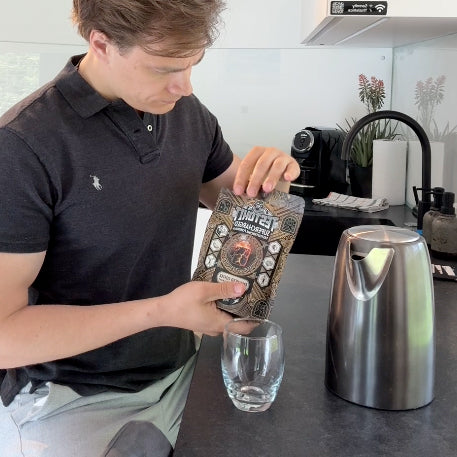
The biggest determinant of whether a natural testosterone supplement works is whether you take it every single day for several months.
Shilajit took 90 days to produce its 20.45% testosterone increase in the Andrologia trial. Fenugreek showed meaningful effects at 6-8 weeks. Zinc and vitamin D deficiency correction takes months of consistent intake.
These are not fast-acting compounds. They work by filling nutritional gaps and supporting cellular processes that operate on biological timelines, not supplement-marketing timelines. Miss 20-30% of your doses and you reset the accumulation.
Now be honest: do you take four large capsules every morning, reliably, for three months straight? Most men do initially. Life gets in the way - travel, busy mornings, the bottle gets left somewhere, you have it on an empty stomach and it feels unpleasant so you skip it. The data on supplement adherence is not flattering.
You do drink coffee every day. Almost certainly without thinking about it.
That's the entire logic behind the coffee format. The supplement habit becomes the coffee habit. The compliance problem disappears because you're not creating a new behavior - you're upgrading one that's already automatic.
Can you actually fit all the ingredients in coffee?
The concern: are functional coffees just putting tiny, ineffective "fairy dust" amounts of active ingredients on the label?
For cheap products, yes. This is a real problem in the category.
For boost, no. A single scoop of coffee powder typically weighs 10-15g. That's enough physical volume to carry meaningful doses of the active compounds - actually easier to dose properly than cramming the same ingredients into a 500mg capsule. The creatine alone (3g in a serving) would require 4-6 additional capsules if you were supplementing it separately.
Bioavailability is comparable or better in some cases. Zinc and magnesium dissolve well in liquid. Vitamins absorbed alongside a meal - which coffee often accompanies - show better uptake than fasted capsules. The piperine (black pepper extract) in boost increases absorption of several other ingredients.
Price comparison
EU market, approximate monthly cost:
- SUPERCHARGED: around €40/month
- TestoPrime: around €60/month
- Prime Male: around €70/month
The premium pill products cost more partly because of encapsulation, bottling, and multi-capsule serving sizes - manufacturing overhead that doesn't improve the ingredients.
SUPERCHARGED also replaces your existing coffee spend. If you're buying quality coffee, some of that cost offsets the supplement price. Net cost to your current routine is lower than €40.
What the pill format genuinely does better
There are real scenarios where pills win.
Travel: no hot water required, no mug, no mess. A blister pack of capsules is genuinely easier to travel with than a bag of coffee powder.
Specific formulas: some pill products include D-Aspartic Acid or KSM-66 Ashwagandha at doses that don't fit easily in a coffee powder. If you're specifically targeting cortisol reduction with a high-dose Ashwagandha protocol, a dedicated capsule product might serve that better.
Caffeine sensitivity: if you can't have coffee for medical reasons or caffeine sensitivity, pills are the only option. Not many men in this category, but they exist.
For everyone else
If you drink coffee and you want to stop managing a separate supplement stack, the coffee format is the practical superior. You get equivalent or better ingredient bioavailability, in a form you were already going to consume, at a lower price, with near-100% compliance.
The testosterone-support effects build over the same 60-90 day timeline as any pill-based product. The difference is how many doses you actually take during that window.
Frequently Asked Questions
Is it just instant coffee?
No. It's a high-grade Robusta blend - ground, not instant - combined with powdered functional ingredients. The flavor profile is dark and bold, not the thin bitter flavor of instant coffee.
Can I use it as a pre-workout?
Yes. The Robusta caffeine plus 3g creatine makes it a clean, effective pre-workout. Many men drink it 30-45 minutes before training.
Does heat damage the ingredients?
The active ingredients in boost are heat-stable at normal coffee brewing temperatures. Creatine monohydrate has been specifically tested and remains stable in hot water. Don't boil it for an hour - drink it within a reasonable time after mixing.
Will it make me jittery?
The B vitamins and adaptogens help buffer the caffeine curve. Most people report smoother, more sustained energy compared to a standard double espresso.
When do I start feeling it?
Day 1: the caffeine and creatine. Day 7-14: possible improvements in morning clarity and gym performance as creatine saturates. Week 4-8: the hormonal and recovery effects build. The full picture takes 60-90 days.


