
10 Signs Your Testosterone Is Low (And What to Do About It)
TL;DR: Low testosterone doesn't always look like what you think. It's rarely dramatic. More often it's a slow accumulation of smaller things - fatigue that won't shift, a gut that's getting softer, a drive that's quietly gone missing. Here are the 10 signs worth paying attention to, and what you can do about them.
10 Signs Your Testosterone Is Low (And What to Do About It)
Most men don't find out their testosterone is low from a blood test. They find out because something just feels off.
Not broken. Not crisis-level. Just... off. The kind of feeling that's hard to name but impossible to ignore once you've noticed it.
The tricky part is that low testosterone rarely announces itself. It seeps in slowly. Each symptom on its own seems explainable - stress, bad sleep, getting older. But when five of these ten things are all happening at once, that's not coincidence.
Sign 1: You're tired in a way sleep doesn't fix
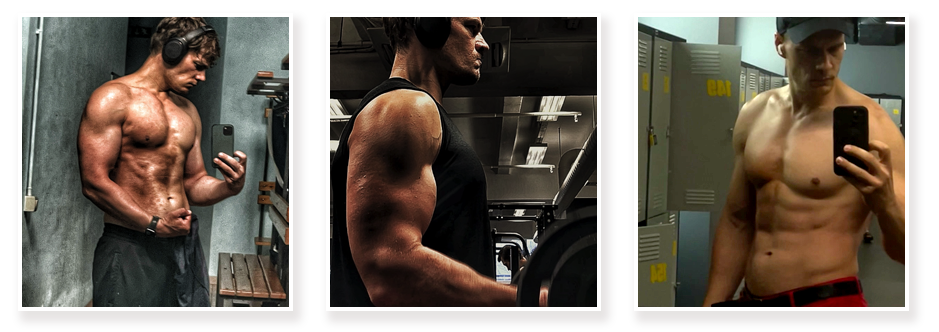
Not the tired you get after a hard week. Something heavier.
You get 7 or 8 hours, you wake up, and within two hours you're already thinking about when you can sit down again. The afternoon is a write-off. Coffee gets you through but the energy never really comes. It's like running a laptop that won't charge above 40%.
Testosterone plays a direct role in mitochondrial energy production. When levels drop, cellular energy generation slows. That flatness you're feeling has a biological explanation.
Sign 2: Brain fog
You know what you want to say. Getting it out of your head and into a sentence takes longer than it should. You re-read the same email three times. You walk into a room and forget why.
This isn't age. Testosterone receptors are dense in the prefrontal cortex - the part of the brain handling focus, decision-making, and working memory. Lower T, lower cognitive sharpness. Men who restore their levels consistently report that the mental clarity returns first.
Sign 3: Your libido has quietly dropped
Not zero. Just noticeably lower than it used to be. You're not thinking about sex the way you were at 25, or even 30. You notice it, your partner probably notices it, and you chalk it up to stress or being busy.
Sometimes it is stress. But consistently reduced sexual drive is one of the most direct indicators of low testosterone. It's worth taking seriously rather than explaining away.
Sign 4: Belly fat that wasn't there before
You haven't changed what you eat. Maybe you're training just as much. But there's something accumulating around your midsection that wasn't there a few years ago.
Fat tissue - particularly visceral fat around the abdomen - contains aromatase, an enzyme that converts testosterone into estrogen. So lower testosterone increases fat storage, and more fat tissue accelerates the conversion of remaining testosterone into estrogen. It's a feedback loop that gets harder to break the longer it runs.
Sign 5: You're losing muscle despite training
You're still going to the gym. You're still eating protein. But recovery takes longer, and the results you used to get from the same effort just aren't there anymore.
Testosterone is the primary anabolic hormone. It governs how efficiently your body rebuilds muscle tissue after training. When it drops, the training stimulus stays the same but the hormonal response to that stimulus weakens. You work just as hard and get noticeably less back.
Sign 6: Mood swings and irritability
Short fuse. Things that wouldn't have bothered you five years ago now genuinely bother you. Or the opposite - a flatness, a low-grade grey feeling that sits under everything.
Both can be low testosterone. The hormone has a significant regulatory role in mood and emotional resilience. Men with clinically low levels have higher rates of depression and irritability. It's not weakness. It's biochemistry.
Sign 7: Sleep is worse
You fall asleep fine. But you're waking at 3am, or your sleep is lighter than it used to be, or you wake up and don't feel like you actually rested.
Testosterone and sleep have a circular relationship. Most testosterone is produced during deep sleep. Poor sleep reduces T production. Lower T worsens sleep quality. Breaking that cycle requires addressing both sides at once.
Sign 8: Your motivation has gone quiet
Not depression exactly. More like the thing that used to push you - ambition, competitiveness, the desire to build something - has gone quiet. You still do what needs doing, but the fire that made you want to do more than what needs doing has dimmed.
This is one men rarely connect to hormones. But testosterone is directly tied to drive and motivation at a neurological level. it's more than about physical performance.
Sign 9: Recovery is slower
Workouts leave you sore for days. Mild illness takes longer to shake. Small injuries linger. You don't bounce back the way you used to.
Testosterone accelerates tissue repair, reduces inflammation, and supports immune function. When levels are suboptimal, recovery slows across the board - physically and in terms of stress resilience.
Sign 10: Loss of competitive edge
You used to care about winning. About being the best in the room. That edge - the one that made you sharpen up for a presentation, push harder in a game, want to outperform - has softened.
Some people call this maturity. Sometimes it is. But when it happens alongside five or six other things on this list, it's more likely hormonal.
What you can actually do right now
Start with the basics that have the strongest evidence behind them:
- Sleep. 7-9 hours, consistent schedule, dark and cool room. One week of poor sleep drops testosterone by 10-15% (Leproult & Van Cauter, JAMA, 2011).
- Resistance training. Compound lifts, progressive overload, 3-4 sessions per week.
- Body fat. Getting below 15-18% body fat removes a major source of T-to-estrogen conversion.
- Reduce alcohol. It disrupts the hormonal signaling between your brain and testes, even at moderate doses.
- Supplementation. Not everything on the shelf is worth taking, but zinc, shilajit, fenugreek, and vitamin D all have genuine clinical backing.
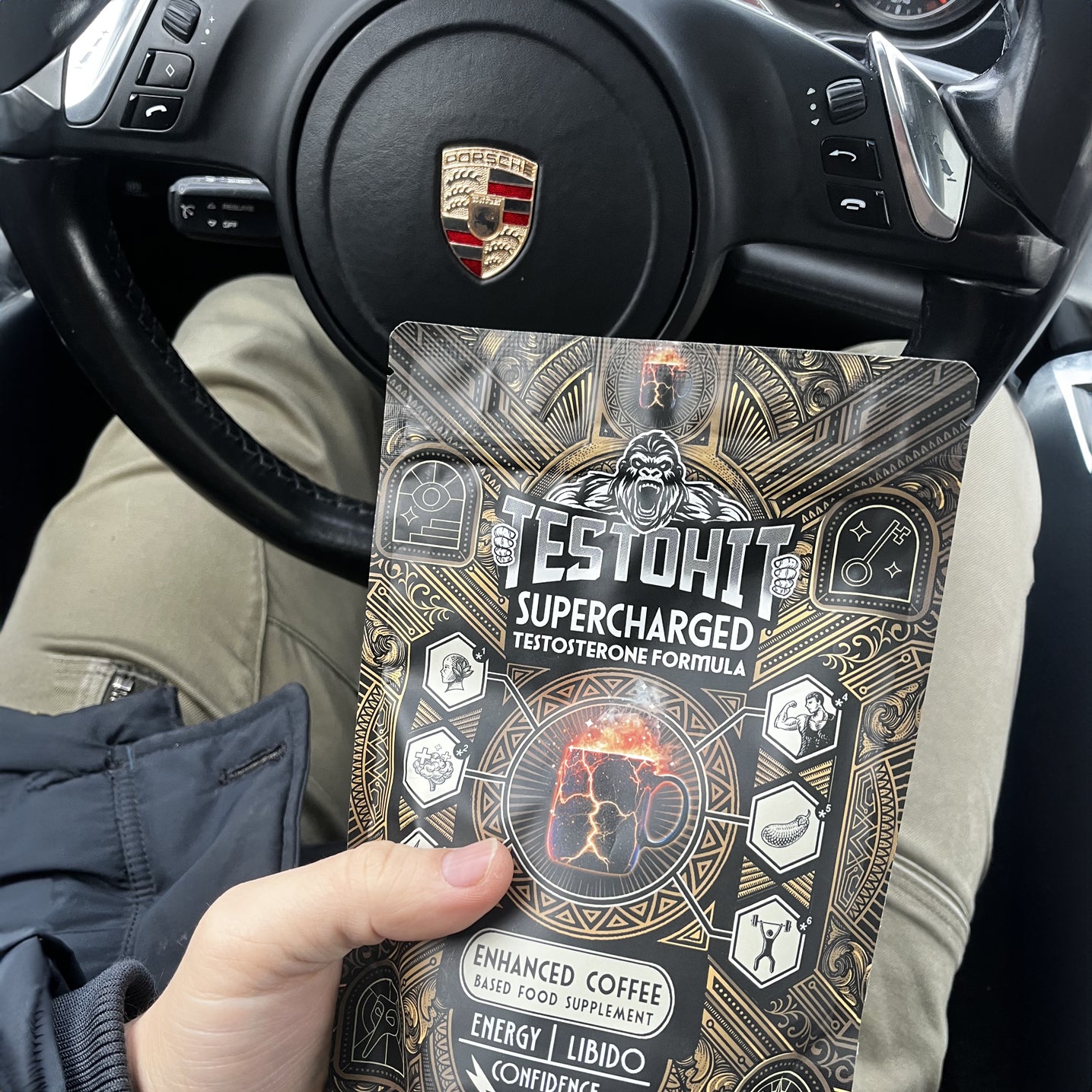
If you want those last four in one place without tracking multiple bottles, SUPERCHARGED testosterone coffee covers them all in a single daily cup.
If five or more things on this list apply to you consistently, get a blood test. Ask for total testosterone, free testosterone, LH, FSH, and SHBG. Normal range for adult men is roughly 300-1000 ng/dL. Below 300 is clinically low. Between 300-500 is the grey zone where lifestyle and supplementation can make a real difference.
Frequently Asked Questions
How do I know if it's actually low testosterone or just stress?
Stress causes many of the same symptoms. The key difference is duration and clustering. If four or more signs on this list have been consistent for more than a few months, it's worth getting blood work done rather than guessing.
Can low testosterone affect younger men?
Yes. While decline typically accelerates after 30, lifestyle factors - chronic stress, poor sleep, high body fat, endocrine disruptors in plastics - can suppress testosterone in men in their mid-20s.
Do I need a prescription to address low testosterone?
Only if you're pursuing TRT (testosterone replacement therapy), which is a clinical treatment for diagnosed hypogonadism. For men in the normal-to-low range looking to optimize, lifestyle changes and natural supplementation don't require a prescription.
How quickly can testosterone be improved naturally?
Sleep improvements can show hormonal effects within days. Exercise and body composition changes take 8-16 weeks. Supplementation with ingredients like shilajit and zinc typically shows measurable improvement at the 6-12 week mark.
Does boost work for this?
It contains the natural ingredients with the strongest clinical backing for testosterone support - shilajit, fenugreek, zinc, vitamin D, magnesium. It won't replace TRT for clinically diagnosed hypogonadism, but for men in the grey zone, it addresses the most common nutritional drivers of T decline.


