
Fenugreek and Testosterone: Does It Work?
Written by Gatis Strods, founder of TestoHit
TL;DR: Clinical studies show that fenugreek extract significantly raises free testosterone levels and improves libido in men. Research confirms that it works by inhibiting enzymes like aromatase, which helps keep more active testosterone in your bloodstream.
Fenugreek and Testosterone: Does It Work?
Fenugreek (Trigonella foenum-graecum) is a clover-like herb native to the Mediterranean region, southern Europe, and western Asia. While it has been a staple in South Asian cooking for centuries, its role as a hormonal support tool is backed by modern science. Unlike some supplements that make vague claims, fenugreek has undergone multiple human trials that show its effect on male hormones.
Does fenugreek increase testosterone?

Yes, fenugreek extract increases free testosterone by preventing its conversion into estrogen and DHT. Clinical trials show that men who take 500mg to 600mg of standardized fenugreek extract daily see higher levels of bioavailable testosterone compared to those who do not.
A study by Wankhede et al. (Journal of Sport Science & Medicine, 2016) examined 60 men who were following a resistance training program. Half the group took 500mg of fenugreek extract, while the other half took a placebo. After 8 weeks, the fenugreek group showed a significant increase in free testosterone. They also saw a decrease in body fat percentage and an increase in strength.
The reason this study is important is that it measured "free" testosterone. This is the testosterone that is not bound to proteins in your blood. It is the only type of testosterone that can actually enter your cells and trigger muscle growth or energy improvements.
How fenugreek works: The mechanism
Fenugreek works primarily through its furostanolic saponins, specifically a compound called protodioscin. These saponins inhibit the enzymes aromatase and 5-alpha reductase, which are responsible for breaking down testosterone.
In the male body, some testosterone is naturally converted into estrogen via the aromatase enzyme. Another portion is converted into DHT (dihydrotestosterone) via 5-alpha reductase. While these processes are normal, an excess of these enzymes can leave you with lower levels of circulating testosterone. By slowing down these conversion pathways, fenugreek allows more of your naturally produced testosterone to stay in its most active form.
This makes fenugreek an "optimizer" rather than a direct stimulator. It does not necessarily force your body to make massive amounts of new hormone. Instead, it helps you keep more of what you already produce.
Improving libido and sexual health

Fenugreek has a long-standing reputation for improving libido, and this is supported by clinical research. A 2011 study published in Phytotherapy Research looked at 60 healthy men between the ages of 25 and 52.
The participants in the study (Steels et al., 2011) took 600mg of fenugreek extract for 12 weeks. The researchers found that the men reported a significant improvement in sexual arousal and desire. More interestingly, the placebo group actually saw a slight decline in free testosterone during the study period, while the fenugreek group maintained their levels. This suggests that fenugreek may help prevent the natural dip in hormones that occurs due to stress or aging.
Extracts vs Seeds: Why the form matters
To get the hormonal benefits shown in studies, you must use a standardized extract rather than raw culinary seeds or fenugreek tea. Culinary seeds are great for cooking, but they do not contain enough of the active saponins to shift your hormones.
Clinical trials use extracts that are concentrated to contain a specific percentage of saponins (often 50% or more). This ensures you get a consistent dose of protodioscin. You would have to eat an impractical amount of raw seeds to match the 500mg or 600mg of extract used in the successful trials. Also, concentrated extracts are easier on the digestive system and do not leave you smelling like maple syrup, which is a common side effect of eating large amounts of the raw herb.
Combining fenugreek with other ingredients

Fenugreek is most effective when paired with ingredients that work on different parts of the testosterone cycle. While fenugreek prevents testosterone from being converted to estrogen, other ingredients like shilajit or zinc focus on the production phase.
In our boost testosterone coffee, we include fenugreek alongside shilajit, maca, and zinc. This creates a multi-step support system. Shilajit improves the energy efficiency of the cells that make testosterone. Zinc provides the raw material for that production. Fenugreek then acts as a guard, ensuring that the testosterone produced stays in your system for longer. This synergy is why a stack is usually better than a single ingredient.
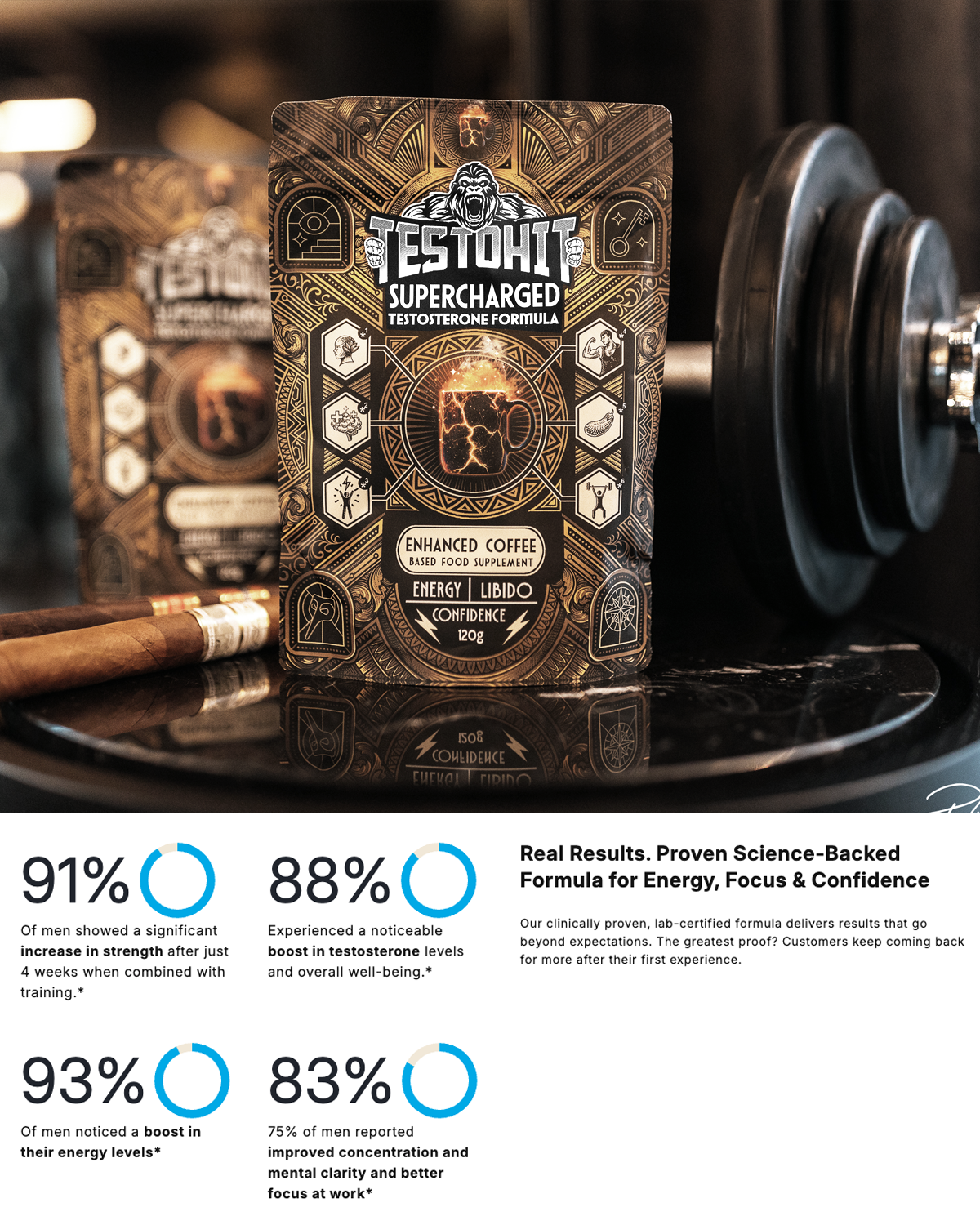
Get the benefits of this stack in SUPERCHARGED testosterone coffee.
Frequently Asked Questions
Does fenugreek increase testosterone?
Yes, clinical studies show that standardized fenugreek extract increases free testosterone levels by inhibiting enzymes that convert T into estrogen and DHT.
How much fenugreek for testosterone?
The research-backed dose is between 500mg and 600mg of a standardized extract per day. Taking it in this form ensures you get the necessary amount of active saponins.
How long does fenugreek take to work?
Most men report an increase in libido and energy within 2 to 3 weeks. Significant changes in body composition and measured testosterone levels are usually seen after 8 to 12 weeks of consistent use.
Does fenugreek have side effects?
Fenugreek is generally safe. The most common side effect is a maple syrup-like smell in sweat or urine. Some people may experience mild digestive upset if they take it on an empty stomach.
Can women take fenugreek for hormones?
Yes, fenugreek is often used by women to support lactation and balance hormones. However, its effects on testosterone are specifically studied in men looking for performance and libido improvements.
Is fenugreek the same as methi?
Yes, "methi" is the Hindi name for fenugreek. While methi is a common ingredient in Indian cuisine, the hormonal benefits require the concentrated extract found in supplements.
*
About the Author
I am Gatis Strods, founder of TestoHit.eu. We specialize in evidence-based nutrition for men. Our products are used by over 20,000 customers and are shipped from our warehouses in the EU. We back every order with a 90-day money-back guarantee.


