
Signs of Hormone Imbalance in Men (That Most Ignore)
Written by Gatis Strods, founder of TestoHit
TL;DR: Signs of hormone imbalance in men include persistent fatigue, increased belly fat, brain fog, and low libido, often caused by a decline in testosterone and a rise in cortisol. Recognizing these symptoms early allows for natural interventions through targeted nutrition and lifestyle changes.
Signs of hormone imbalance in men
Nobody tells men that these symptoms have a name. You're just told it's "part of getting older" or that you "need to get to the gym more." But when you're staring at the fridge at 10pm wondering where your ambition went, or why your belt seems to be shrinking while your muscle disappears, you aren't just aging. You’re likely experiencing signs of hormone imbalance in men.
It’s more than a female issue. Men have a complex endocrine system that relies on a precise balance of testosterone, cortisol, estrogen, and insulin to function. When one of these goes out of whack, the whole system starts to stutter. Gatis Strods realized this when his own energy crashed at 30. He didn't just need a holiday; he needed to fix his internal chemistry.
The classic testosterone deficit

The most common signs of hormone imbalance in men are low energy, reduced muscle mass, and a decline in libido, all of which point toward a testosterone deficiency. Grossmann et al., in Clinical Endocrinology (2010), highlight that these symptoms are clinical indicators of male hypogonadism or declining T levels. If you feel like a shadow of your former self, your hormones are the likely culprit.
Low testosterone doesn't just make you tired; it changes how your body functions. You might notice that you're losing the "edge" you used to have at work. Decisions feel harder. The gym feels like a chore rather than an outlet. This isn't a character flaw; it's a biological signal that your primary male hormone is below where it needs to be.
The cortisol and estrogen creep
When testosterone drops, cortisol and estrogen often rise, leading to increased body fat and heightened emotional irritability. This is often referred to as the "testosterone-cortisol axis." If you're constantly stressed, your cortisol is high, which actively blocks your body's ability to produce and use testosterone.
Estrogen is also a factor. Men need some estrogen, but as body fat increases, especially visceral belly fat, an enzyme called aromatase converts your precious testosterone into estrogen. Giagulli et al. (Journal of Clinical Endocrinology & Metabolism, 1994) showed how obesity and testosterone are linked in a vicious cycle. More fat equals more estrogen, which equals less testosterone, which equals more fat. It's a trap.
Brain fog and the "Frosted Glass" effect
Brain fog in men is often described as "living behind frosted glass," a cognitive symptom frequently linked to hormonal fluctuations and poor metabolic health. You know the feeling. You're in a meeting, and you know the answer is there, but you can't quite reach it. Your focus is shot.
This isn't just lack of sleep. Testosterone and its metabolites are neuroprotective. They help maintain the health of your neurons and support the neurotransmitters responsible for focus and mood. When your hormones are imbalanced, your brain effectively goes into a low-power mode.
Insulin resistance and the belly fat connection
A hidden sign of hormone imbalance in men is the sudden development of a "spare tire" even if your diet hasn't changed significantly. This is often tied to insulin resistance, which goes hand-in-hand with low testosterone. When your cells stop responding to insulin, your body stores more energy as fat, particularly around the midsection.
This visceral fat is metabolically active and inflammatory. It sends signals to your brain to eat more and to your endocrine system to produce less T. If you can't seem to lose the belly fat despite "doing the right things," you need to look at your hormonal profile rather than just your calorie count.
Sleep architecture and nighttime recovery
If you find yourself waking up at 3am with a racing mind or simply feeling unrefreshed after a full night's sleep, your hormones are likely out of balance. Testosterone production peaks during deep REM sleep. If your sleep is fragmented because of high cortisol or low magnesium, your T levels will suffer.
It’s a feedback loop. Poor sleep lowers testosterone. Low testosterone makes it harder to get deep sleep. Breaking this cycle requires more than just a better mattress; it requires providing your body with the raw materials, like zinc and shilajit, needed to regulate these hormonal rhythms.
Frequently Asked Questions
What are the signs of hormone imbalance in men?
The primary signs include chronic fatigue, loss of muscle mass, increased belly fat, brain fog, low libido, and increased irritability. These symptoms often appear gradually, leading many men to dismiss them as a normal part of aging when they are actually biological imbalances.
Can stress cause hormone imbalance in men?
Yes, chronic stress leads to high cortisol levels, which directly inhibits the production of testosterone and disrupts the balance of other hormones like insulin. This "stress response" is a major driver of hormonal decline in modern men over the age of 30.
Does diet affect male hormones?
Diet is one of the most significant factors in hormonal health, as your body requires specific fats, minerals, and vitamins to synthesize hormones like testosterone. A diet high in processed sugars and low in essential minerals like zinc and magnesium will lead to a decline in hormonal function.
At what age do men's hormones start declining?
Men’s testosterone levels typically begin a steady decline of 1-2% per year starting around age 30. While this is a natural process, lifestyle factors and nutritional deficiencies can accelerate this decline, leading to symptoms of imbalance much earlier than expected.
Can hormone imbalance in men be fixed naturally?
In many cases, hormonal balance can be restored through targeted nutritional supplementation, stress management, and improved sleep hygiene. Ingredients like shilajit, zinc, and fenugreek have been shown to support the body's natural production of testosterone.
Should I get a hormone test?
If you are experiencing multiple symptoms of imbalance that affect your quality of life, a blood test for total and free testosterone, cortisol, and estrogen can provide a clear picture. Having data allows you to make more informed decisions about your health and supplementation.
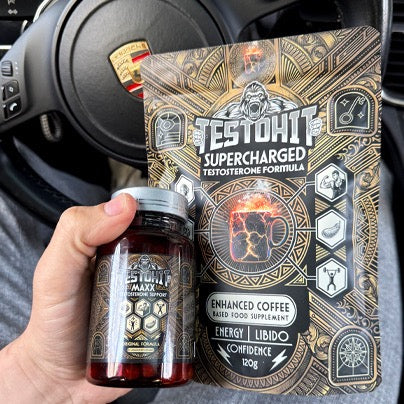
If you want to address this properly, SUPERCHARGED covers the key bases - zinc, shilajit, magnesium, creatine, fenugreek - in your morning coffee. MAXX adds DAA, Rhodiola, and Boron for the full stack.


