
Magnesium for Men: Testosterone, Sleep, and What Form to Take
Written by Gatis Strods, founder of TestoHit
Magnesium for Men: Testosterone, Sleep, and What Form to Take
TL;DR: Magnesium is a critical mineral for men over 30 that supports free testosterone levels and sleep architecture. Clinical evidence suggests that magnesium bisglycinate is the superior form for absorption and sleep quality. While it is not a "magic pill" for hormones, it acts as a necessary foundation for endocrine health and recovery.
Magnesium is the quiet achiever of supplements. No dramatic origin story, no celebrity endorsement. Just consistent clinical evidence. I spent years ignoring it because it wasn't "exciting" like a new pre-workout or an exotic herb. That was a mistake. When Gatis and I were looking at the data for TestoHit, magnesium kept showing up as a non-negotiable floor for male health. If your magnesium is low, your body is effectively running on an old operating system that crashes whenever you try to open too many tabs. It works, but it's frustrating and inefficient.
What is the best magnesium for men's testosterone?
The best magnesium for men's testosterone is magnesium bisglycinate or magnesium citrate due to their high bioavailability and ability to reach systemic circulation. Clinical data shows that magnesium levels are directly correlated with testosterone levels in men of all ages. In a study by Maggio et al. (Biometals, 2011), researchers looked at 399 elderly men and found that magnesium levels were strongly and independently associated with anabolic hormones, including testosterone and IGF-1. This isn't just about aging men; the mineral serves as a cofactor for over 300 enzymatic reactions, many of which involve steroidogenesis.
If you are deficient, your body prioritises survival over optimization. Testosterone production is a luxury process. When magnesium levels drop, the body struggles to maintain the enzymatic environment required for optimal hormone output. Most men in the EU get about 250mg per day from their diet, while the clinical requirement for active men is closer to 400mg of elemental magnesium. Closing that 150mg gap is often the difference between feeling "fine" and feeling actually capable of hitting a personal best in the gym.
Does magnesium increase testosterone?
Magnesium increases free testosterone by preventing it from binding to Sex Hormone Binding Globulin (SHBG), which makes more of the hormone biologically active. A study published in Biological Trace Element Research (2011) demonstrated that both sedentary individuals and athletes saw significant increases in free and total testosterone after four weeks of magnesium supplementation. The athletes saw the biggest jump, suggesting that physical stress increases the body's demand for the mineral.
Think of SHBG like a biological handcuffs. It floats around your blood, grabs your testosterone, and makes it useless for building muscle or improving your mood. Magnesium competes for these binding sites. By taking enough magnesium, you effectively keep more of your testosterone "free" to do its job. It isn't that magnesium "creates" more testosterone out of thin air; it ensures the testosterone you already have isn't being wasted by your own internal chemistry.
Can magnesium improve sleep quality?
Magnesium improves sleep quality by regulating neurotransmitters like GABA and decreasing cortisol, which allows the nervous system to shift into a parasympathetic state. Sleep is the primary window for testosterone production. If you aren't sleeping, you aren't producing. Chollet et al. (Sleep, 2001) found that magnesium deficiency leads to sleep deprivation and changes in sleep architecture, specifically reducing deep sleep stages.
When I started taking magnesium bisglycinate, the most noticeable change wasn't my bench press; it was my "time to fall asleep." Magnesium bisglycinate is magnesium bound to glycine, an amino acid that has its own calming effects on the brain. This combination is the gold standard for men who have a "busy brain" at 11 PM. It doesn't knock you out like a sedative; it simply removes the friction that prevents you from drifting off naturally.
What is the difference between magnesium glycinate and citrate?
The difference between magnesium glycinate and citrate lies in their absorption rates and their secondary effects on the digestive system. Magnesium glycinate (or bisglycinate) is highly bioavailable and gentle on the stomach, making it the preferred choice for sleep and long term mineral status. Magnesium citrate is also well-absorbed but has a mild laxative effect, which is why it is often used for digestive regularity rather than hormonal support.
If you take magnesium oxide, which is the cheap stuff found in most supermarket multivitamins, you are mostly wasting your money. Oxide has an absorption rate as low as 4%. It is essentially a chalky laxative. Citrate is a solid middle ground, but if your goal is sleep and testosterone, glycinate is the winner. It crosses the blood-brain barrier more effectively and doesn't cause a midnight sprint to the bathroom.
When should men take magnesium?
Men should take magnesium in the evening, approximately 30 to 60 minutes before bed, to take advantage of its muscle-relaxing and sleep-promoting properties. While you can take it any time, the sedative-adjacent effects of magnesium glycinate make it an ideal part of a wind-down routine. If you are using it specifically for training recovery, taking it after a workout can also help mitigate the spike in cortisol associated with heavy lifting.
Consistency is more important than timing. Magnesium isn't like caffeine; you don't feel it in 20 minutes. It takes a few weeks to saturate your tissues and move the needle on your blood markers. I tell men to stick with it for 30 days before deciding if it "works." By the end of that month, the combination of better sleep and reduced muscle cramping usually makes the case for itself.
How much magnesium per day for testosterone?
The optimal dose of magnesium for testosterone support is 400mg of elemental magnesium per day, adjusted for dietary intake and activity level. Most clinical trials that showed a hormonal benefit used doses in the 400mg to 600mg range. It is important to look at the "elemental" weight on the supplement label, not just the total weight of the compound. A 1,000mg pill of magnesium glycinate might only contain 120mg of actual magnesium.
At TestoHit, we designed our stack to cover these bases without overcomplicating things. We include magnesium because we know the dietary gap is real. When combined with zinc, it forms a synergistic pair that many athletes know as ZMA, though we prefer the updated research on how these minerals work alongside vitamins like D3 and B6.
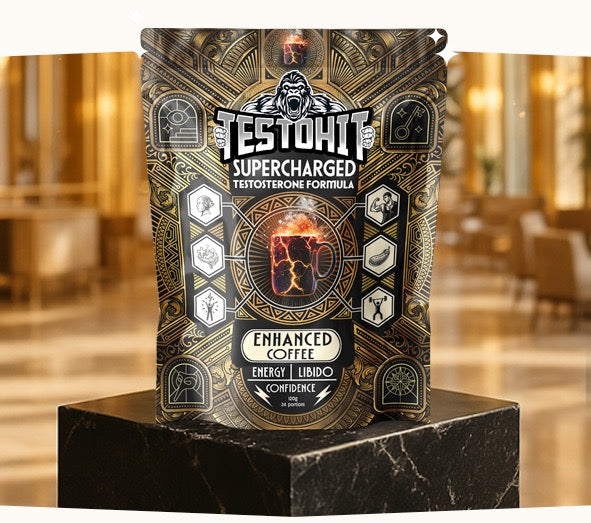
For men over 30 wanting to cover these bases, SUPERCHARGED includes magnesium and zinc which synergises with magnesium for T. For the full stack, MAXX adds DAA, Rhodiola, and Boron.
FAQ
What is the best magnesium for men's testosterone?
Magnesium bisglycinate is widely considered the best form because it offers high bioavailability and does not cause digestive distress at therapeutic doses.
Does magnesium increase testosterone?
Magnesium supports testosterone by increasing free testosterone levels and preventing the hormone from binding to SHBG, particularly in men who are physically active.
When should men take magnesium?
Taking magnesium in the evening is best for most men, as it supports the nervous system's transition into sleep and aids in muscle recovery.
How much magnesium per day for testosterone?
A daily dose of 400mg of elemental magnesium is the standard target for men looking to support hormonal health and athletic performance.
What is the difference between magnesium glycinate and citrate?
Glycinate is better for sleep and brain health due to its glycine bond, while citrate is better for digestion and has a slight laxative effect.
Can magnesium improve sleep quality?
Yes, magnesium regulates GABA receptors and lowers cortisol, which helps improve sleep architecture and increases the duration of deep sleep.


